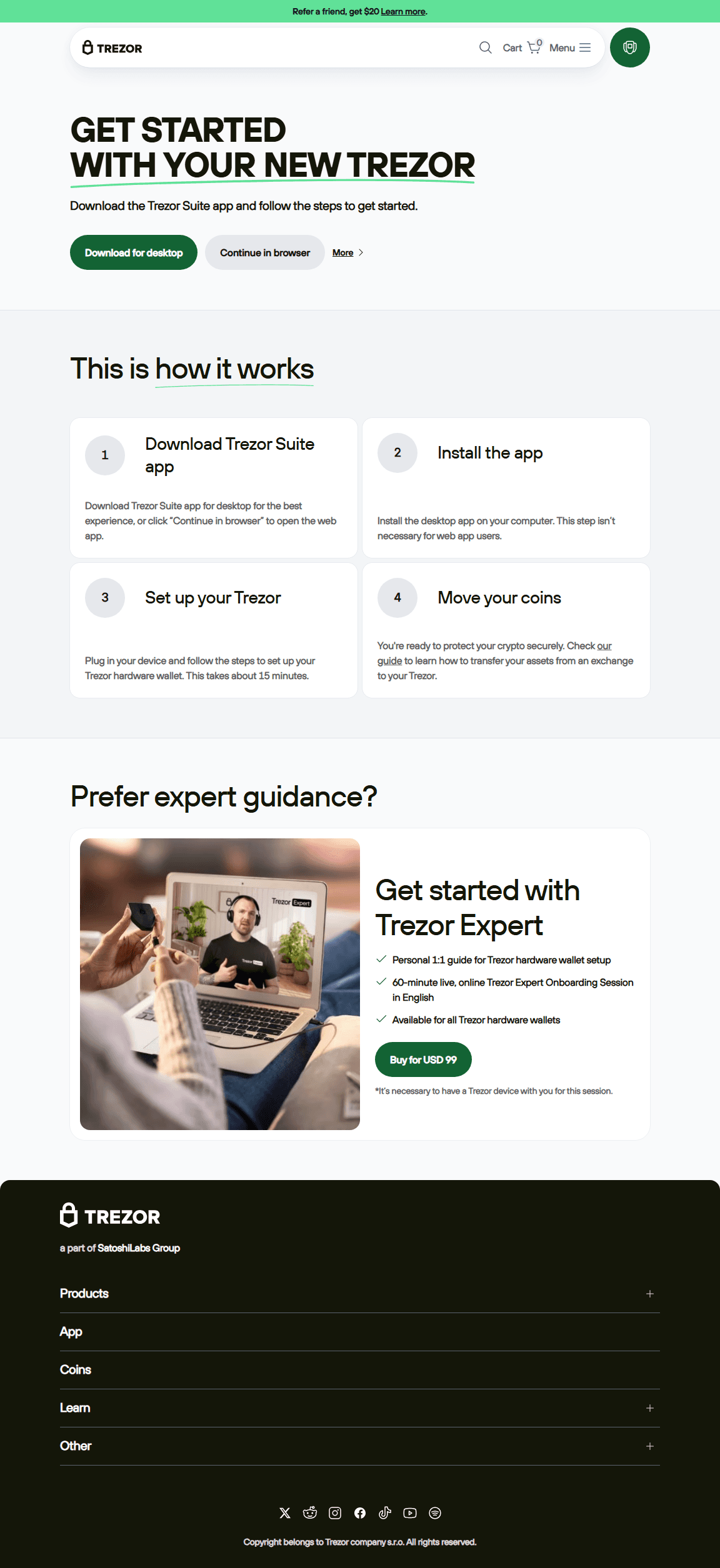
Trezor Login: How to Safely Access Your Hardware Wallet
Cryptocurrencies require secure storage to protect your assets from hacks, scams, and theft. One of the most reliable methods is a hardware wallet like Trezor, which stores private keys offline. To manage your funds, you need to understand the Trezor login process, which involves connecting your device to Trezor Suite and confirming access with a PIN. This guide explains the login process, security measures, and how to use Trezor safely for sending, receiving, and managing cryptocurrency.
What Is a Trezor Wallet?
Trezor is a hardware wallet designed to safeguard your cryptocurrency keys offline. Unlike software wallets or exchange accounts, Trezor ensures your private keys never leave the device. This makes it extremely secure against online threats.
Trezor currently offers multiple models:
Trezor Model One – suitable for beginners and basic crypto management
Trezor Model T – advanced features, touchscreen interface, broader coin support
Both models support a wide range of cryptocurrencies, including Bitcoin, Ethereum, Litecoin, and ERC-20 tokens, giving users a versatile solution for secure crypto management.
Understanding Trezor Login
Trezor does not use a conventional login with a username and password. Instead, logging into your wallet is done via Trezor Suite, the official software application. Accessing your wallet requires:
Opening Trezor Suite on your computer or mobile device
Connecting your Trezor hardware wallet
Entering your PIN code on the device
Verifying the wallet in the software
This process ensures that only someone with the physical device and correct PIN can access and manage the funds stored on it.
Why Trezor Uses Hardware-Based Login
Trezor’s login system is hardware-based to provide maximum security:
Offline key storage: Private keys never leave the device
Physical verification: Transactions must be confirmed on the device itself
No online account: Reduces risk of remote hacking
Full user control: You maintain ownership of funds without relying on servers
This design prevents unauthorized access even if someone has access to your computer or Trezor Suite.
Preparing Your Trezor for Login
Before logging in, ensure your Trezor device is fully set up. Preparation steps include:
Setting a PIN – Protects the device from unauthorized access
Writing down the recovery seed – The 12- or 24-word recovery phrase is the only way to restore your wallet if the device is lost, damaged, or reset
Installing Trezor Suite – Download the official app from the Trezor website for your operating system
Having these steps completed ensures that login and account access are smooth and secure.
Step 1: Download and Launch Trezor Suite
Begin by downloading Trezor Suite from the official Trezor website. Available for Windows, macOS, Linux, and mobile devices, Trezor Suite is the central hub for managing all of your accounts and transactions.
After installation, open the application and select the correct Trezor device model. Using the official software prevents exposure to malicious or counterfeit apps.
Step 2: Connect Your Trezor Device
Use the supplied USB or USB-C cable to connect your Trezor to your computer or mobile device. The device will power on automatically. You will then be prompted to enter your PIN code on the Trezor device itself.
Key points:
The PIN keeps your wallet secure from unauthorized access
Entering the wrong PIN multiple times may reset the device
Always keep the PIN confidential
Step 3: Verify the Device
Once connected, Trezor Suite verifies the device to ensure authenticity. Verification steps include:
Confirming the firmware version is up-to-date
Checking the device’s secure element for authenticity
Prompting for firmware updates if necessary
Device verification prevents counterfeit or tampered hardware from compromising your wallet.
Step 4: Access Your Cryptocurrency Accounts
After logging in, Trezor Suite lets you view and manage multiple cryptocurrency accounts. Features include:
Checking balances for supported cryptocurrencies
Tracking transaction history
Adding multiple accounts for different coins and tokens
Monitoring portfolio performance
Supported assets include Bitcoin, Ethereum, Cardano, XRP, Litecoin, and numerous tokens.
Step 5: Sending and Receiving Crypto
Receiving Cryptocurrency
Select the account
Click “Receive” in Trezor Suite
Verify the displayed address on your Trezor device
Share the verified address with the sender
Always confirm the address on the device to ensure no malware has altered it.
Sending Cryptocurrency
Select the account
Enter the recipient’s address and amount
Review transaction fees and details
Confirm the transaction physically on your Trezor device
All transactions require physical confirmation, protecting against unauthorized transfers.
Best Practices for Trezor Login Security
To maximize security:
Never share your recovery seed
Do not store your seed digitally or take photos
Keep your PIN private and secure
Use Trezor Suite only from official sources
Update firmware and software regularly
Be cautious of phishing attempts or fraudulent websites
Your recovery seed is the most critical element of your wallet. Protecting it ensures your crypto remains secure.
Troubleshooting Trezor Login Issues
Common problems and solutions include:
Device not recognized: Try a different USB port or cable, restart Trezor Suite
Forgotten PIN: Use the recovery seed to restore the wallet on a new device
Firmware update required: Follow the Trezor Suite instructions carefully
Following the official guidance ensures that login problems are resolved safely without compromising security.
Conclusion
Trezor login is a secure, hardware-based process that relies on your device, PIN, and recovery seed. By connecting the device to Trezor Suite, verifying authenticity, and confirming transactions physically, you maintain full control over your cryptocurrency. Following best practices for security ensures your funds remain protected from hacks, scams, and unauthorized access. Trezor provides a trusted, reliable, and user-friendly solution for safely managing digital assets over the long term.